






May Seed Scoop
Seeking a Candidate for the Regulatory Services Committee
Canada’s seed certification system is a cornerstone of the national seed sector, underpinning a sustainable, competitive, and innovative agri-food system. At its core are science-based standards that safeguard varietal purity, varietal identity, and overall confidence in certified seed—both domestically and in international markets.
About the Regulatory Services Committee
CSGA’s Regulatory Services Committee (RSC) plays a central role in developing and maintaining these standards. The RSC is responsible for reviewing certification requirements and recommending updates to ensure they remain current, practical, and aligned with our international trading partners.
The Committee also provides oversight and strategic direction to eight crop-specific working groups, along with ad hoc expert groups. These working groups contribute technical insight and recommendations that help ensure Canada’s seed crop certification system continues to deliver high levels of quality assurance and industry confidence.
Join CSGA’s Regulatory Services Committee
As part of CSGA’s commitment to transparency and multi-stakeholder engagement, the Regulatory Services Committee (RSC) includes perspectives from across regions, crop kinds, and the seed value chain. These diverse viewpoints help inform our work and support the development of standards that reflect the needs of Canada’s seed sector.
We are currently inviting expressions of interest for one external stakeholder position on the RSC, representing the seed processing, distribution, and retail sectors.
Participation on the RSC offers a meaningful opportunity to:
- Contribute to the development and continuous improvement of certification standards
- Help strengthen Canada’s regulatory framework for seed
- Engage with experts from across the seed sector
- Influence the future direction of seed certification in Canada
If you are committed to advancing the seed sector and want to play a role in shaping its future, we encourage you to submit an expression of interest by 5pm ET June 15, 2026.
Back to topChanges to CFIA Inspection Billing for 2026
CSGA would like to share an update on changes to Canadian Food Inspection Agency (CFIA) inspection billing for the 2026 crop year.
As in previous years, CSGA will continue to invoice and collect inspection costs on behalf of the CFIA. However, beginning in 2026 CFIA inspection costs will be billed after inspections are completed. Other CSGA fees will continue to be invoiced at the time of application.
It is important to note that the CFIA does not inspect most seed crops. CFIA inspection is limited to specific circumstances, including Section 2 and 3 crops when the seed is intended for export to the European Union as pre-basic or basic seed, higher generation plots under Section 12, and fields of crop kinds outside Sections 2 and 3 where an Authorized Seed Crop Inspection Service is not available to complete the inspection. For more information, see CSGA’s Application Support Document or use CSGA’s online inspection service tool to find an inspection service authorized in your region.
Please review the CFIA notice linked below for full details, including how inspection costs will be calculated under the new approach.
Questions about CFIA inspection billing can be directed to the CFIA Seed Section at SeedSemence@inspection.gc.ca.
Back to topNotice of Proposed Inflationary Fee Adjustment: Member Vote at AGM
To ensure the Association’s long-term financial sustainability and maintain the quality of certification and member services, CSGA members will be asked to vote at the upcoming Annual General Meeting on a proposed 4.74% inflationary adjustment to all CSGA service fees, effective February 1, 2027.
The proposed adjustment reflects CSGA’s continued commitment to sound financial stewardship while responding to ongoing inflationary pressures. Although CSGA has made significant internal cost reductions, rising inflation make this adjustment necessary. Members will vote on the proposal at the AGM in Whitehorse on July 5, 2026. To read the full background and rational, please see the link below.
Back to top#CSGA2026 in Whitehorse is Getting Closer
CSGA’s 2026 Annual General Meeting is coming up July 3–5 in Whitehorse, Yukon, under the theme Building Resiliency – Stronger Seed. Stronger Agriculture. Stronger Future.
Members and stakeholders are encouraged to register, book accommodations, and review the full agenda. This year’s program includes the AGM Business Meeting, speaker sessions, Family Fun Night at Takhini River Ranch, and the Awards Gala at the Kwanlin Dün Cultural Centre. The Companion and Children’s Programs are now sold out, but wait lists are open. Individual tickets for the evening social events remain available.
The agenda features discussions on agriculture’s role as a strategic sector, the future of plant breeding in Canada, soil health, farm safety, mental health, cover crops, and upcoming seed standards consultations. Featured speakers and panelists include Senator Pat Duncan, Senator Robert Black, Carla Ventin, Brodie Berrigan, Frank Drouin, Darcy Pawlik, François Eudes, Dr. Curtis Pozniak, Robin Anderson, Dr. Briana Hagen, Kevin Elmy, Mike Scheffel, and keynote speaker Bruce Kirkby.
AGM reminders: Affiliate Director nominations and Member Proposals
Affiliate members are invited to submit nominations for the Affiliate Director position on CSGA’s Board of Directors. CSGA members are also invited to submit Member Proposals for discussion at the AGM. Both are due by 5:00 p.m. ET on Wednesday, June 10, 2026.

Seed Crop Certification Deadlines

As the 2026 crop season gets underway, seed growers are reminded to review and submit their seed crop certification applications and CSGA membership applications by the applicable deadline dates.
Applications for fall seeded cereals are due May 25, followed by the June 10 deadline for fababeans, forages, flax, canola, mustard, corn and field peas. Applications for all other crops not listed are due June 20, while field beans and buckwheat are due July 10 and soybeans are due July 25.
Growers interested in beginning in plot production are encouraged to submit an Application to Commence Plot Probation in SeedCert as soon as possible
CSGA crop applications may be cancelled, subject to the applicable fee. To cancel an application, growers must contact their inspection service.
Applications can also be modified in SeedCert using the tools available on the Crop History tab. Most information on the application form can be updated until the point of inspection. After inspection, growers must contact certification@seedgrowers.ca for assistance with any required changes.
Back to topWhat Inspectors Look for in the Field

Following March’s introduction to your seed crop inspector, Part 2 looks at what happens during a field inspection and what follows. Once the growing season is underway, the next step is the field inspection itself.
Seed crop inspection involves documenting and reporting field conditions relevant to the certification requirements and standards set out in Circular 6. Inspectors are trained to assess and report on field conditions at a specific stage of growth, when off-types are most visible. CSGA’s role is to review and evaluate the inspection findings to determine whether the crop meets the certification requirements.
How an Inspection Is Conducted
Field inspectors follow the Specific Work Instructions (SWI) maintained by the Canadian Food Inspection Agency. If you have time, it is helpful to review these to better understand how your crops are inspected.
Each crop kind has a specific inspection window when varietal characteristics are most visible. Inspectors schedule visits during this optimal period to ensure an accurate assessment.
The inspector does not simply observe from the edge of the field but walks through the crop following one of the patterns described in the SWI. At six points along this pattern, the inspector stops to count impurities within a defined “count” area. The average number of impurities found across these counts is used to estimate levels across the field and is compared against the maximum impurity standards outlined in Circular 6.
All findings are recorded and submitted as part of the official inspection report, which supports the final certification decision.
What to Expect on Inspection Day
You do not need to be present during the inspection, but being available can be helpful if the inspector has questions. If an isolation issue is identified, the inspector will notify you if corrective action may be required. Please follow up with CSGA before taking any corrective action or removing any seed crop, as only CSGA can confirm the action required.
Working Together for Success
Your inspector’s role is to provide an accurate, unbiased assessment of your crop. Understanding what they are looking for—and how they carry out their work—can help make the process more transparent and collaborative.
In the end, inspections are not just about meeting standards, but about maintaining the integrity of Canada’s seed system and supporting the value of your pedigreed seed.
Back to topSupporting New Seed Growers with CSGA Learn

#Plant2026 is underway! If you’re new to Certified seed production, CSGA Learn’s Introduction to Seed Production program offers five key courses… learn as you grow.
- Course 1: Introduction to the Canadian Seed Sector
- Course 2: Seed Certification Classes
- Course 3: Producing Foundation, Registered and Certified Seed Crops
- Course 4: Seed Crop Certification Process and Traceability
- Course 7: Harvest, Handling, and Storage
From understanding certification classes and Circular 6 requirements to learning about traceability, applications, equipment cleanout, harvest, handling and storage, this program helps build the knowledge needed for successful certified seed production.
Now Open - 2026 Census of Agriculture
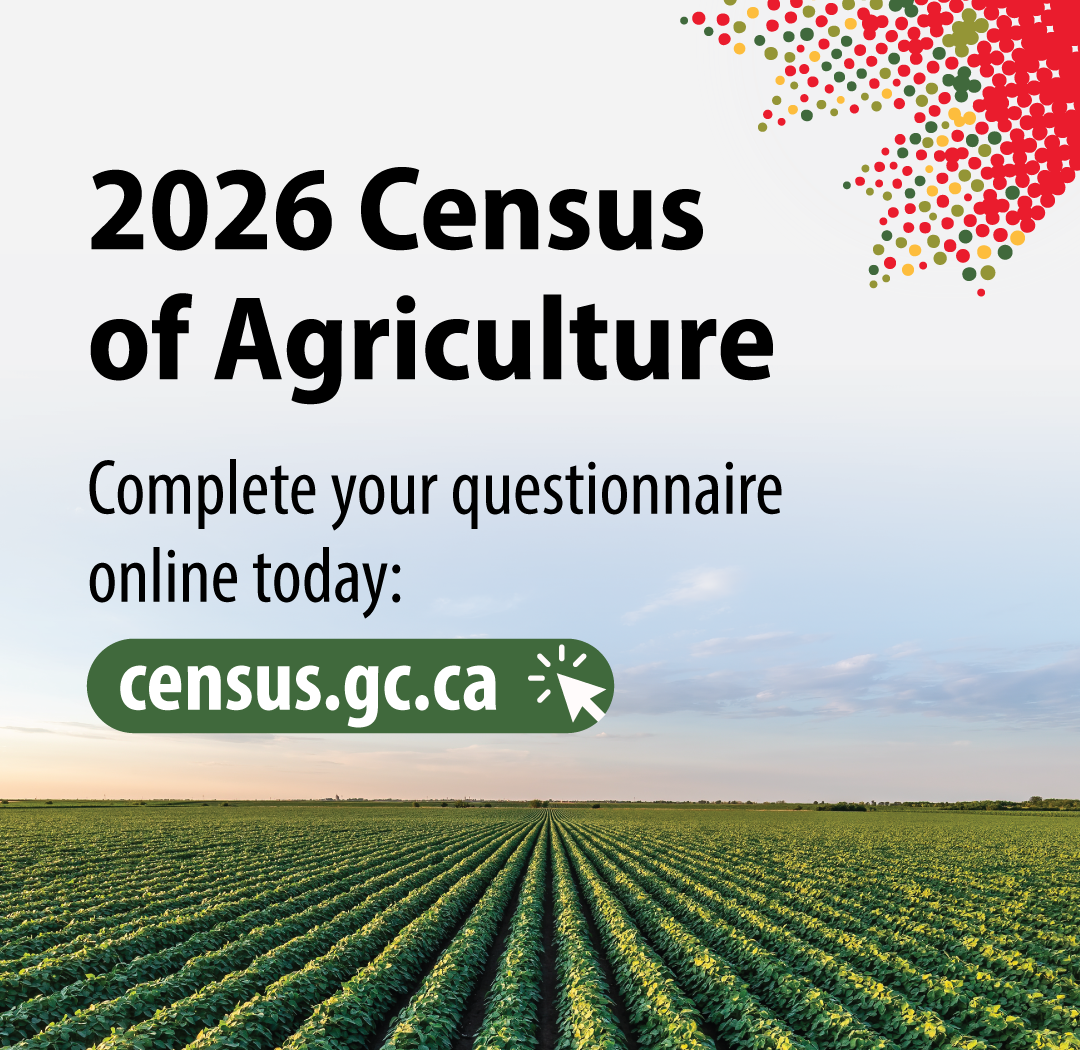 Farm operators are encouraged to complete the census by July 31, 2026. The census provides vital data on crops, livestock, land use, labour, farm finances, and more—helping ensure decision-makers have accurate, up-to-date information to support farmers, farm communities, and Canada’s agriculture sector.
Let’s do our part to make sure the census reflects the realities of Canadian agriculture.
- Complete the census: gc.ca/en/survey/agriculture/3438
- FAQ: gc.ca/en/faq/census-agriculture
Thank you to our AGM Signature Sponsors!
Our AGM is made possible through the generous support of our sponsors. Their commitment to Canadian seed growers and seed businesses helps deliver an engaging and impactful ACPS 2026 in Whitehorse, Yukon.
 |
Family Fun Night Sponsor |
 |
Awards Gala Dinner Sponsor |
 |
Lanyard Sponsor |
 |
Media Sponsor |
Contact Us
CSGA staff are here to help you. Don’t hesitate to contact us. Remember the CSGA national office operates in the Eastern Time (ET) zone.
Telephone: (613) 236-0497
Email: communications@seedgrowers.ca
Address: 21 Florence St, Ottawa, Ontario K2P 0W6
Click here for complete staff contact information.